
This custom staircase project involved building curved hickory bullnoses and risers to fit an unusually shaped set of steps. The work required custom forms, bent lamination techniques, and careful staining and finishing to match the home's existing hickory flooring. From preparing the wood in the workshop to the final finish, each component was made specifically for this staircase.
Building Custom Curved Stair Components
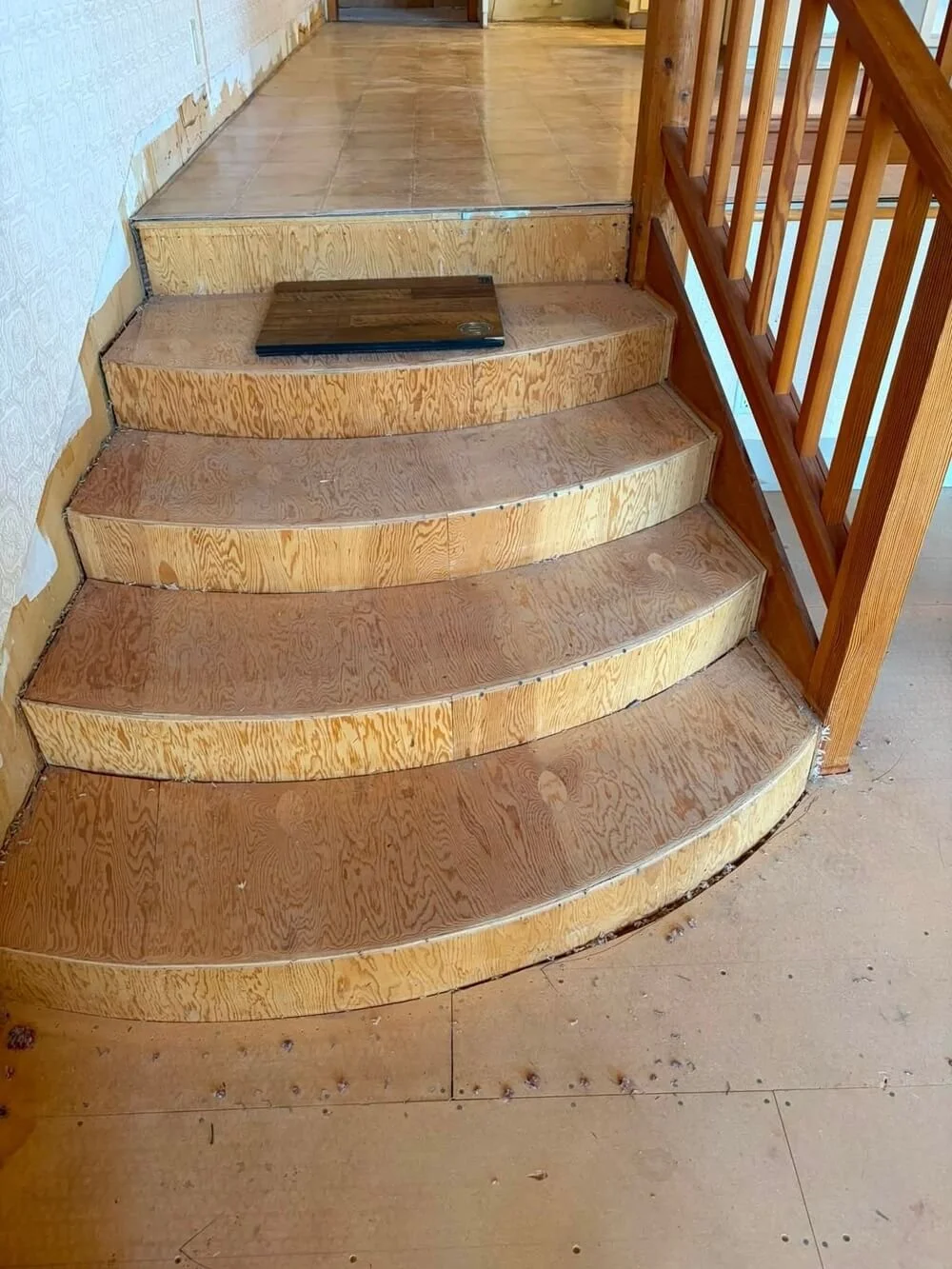
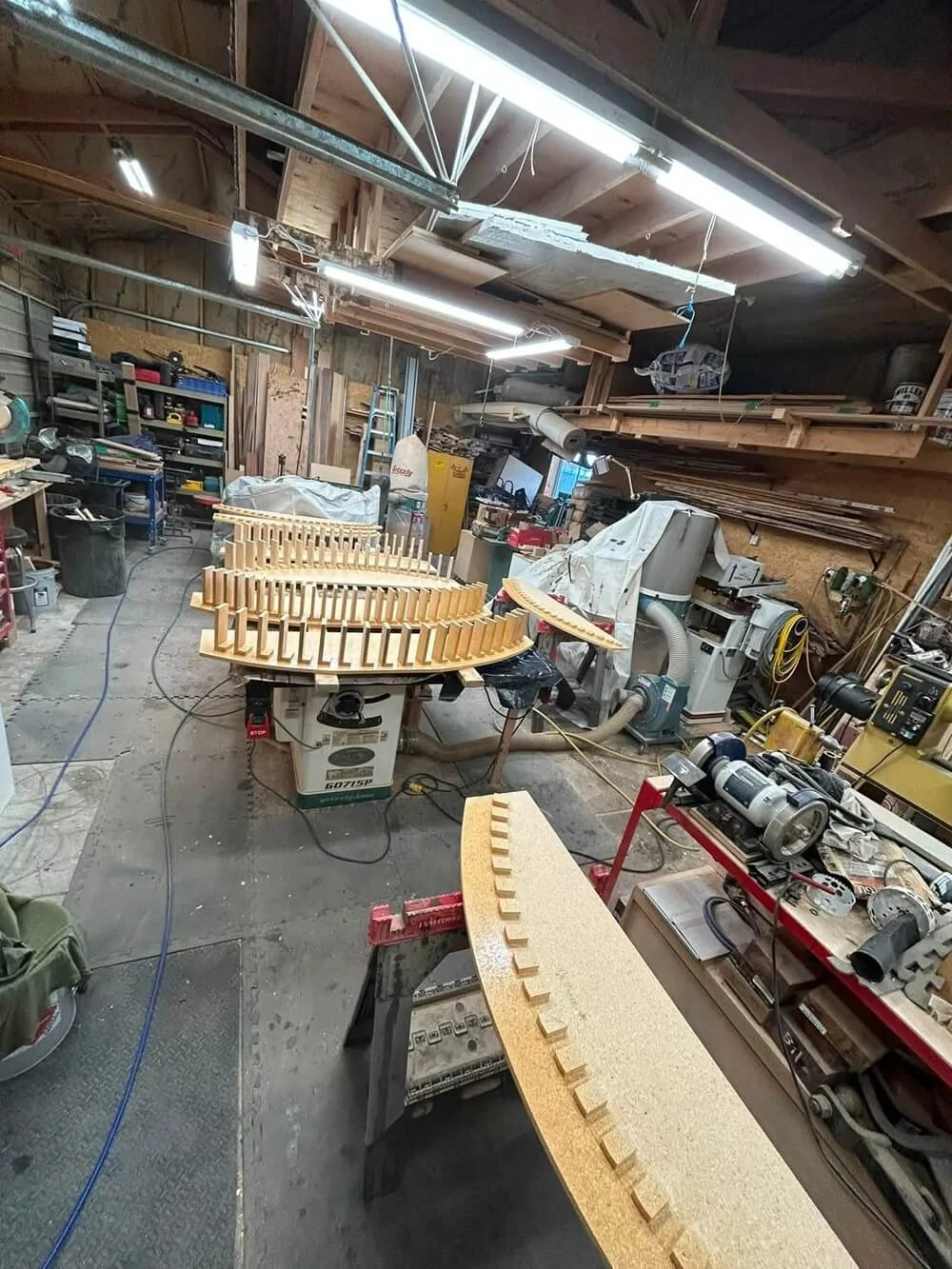
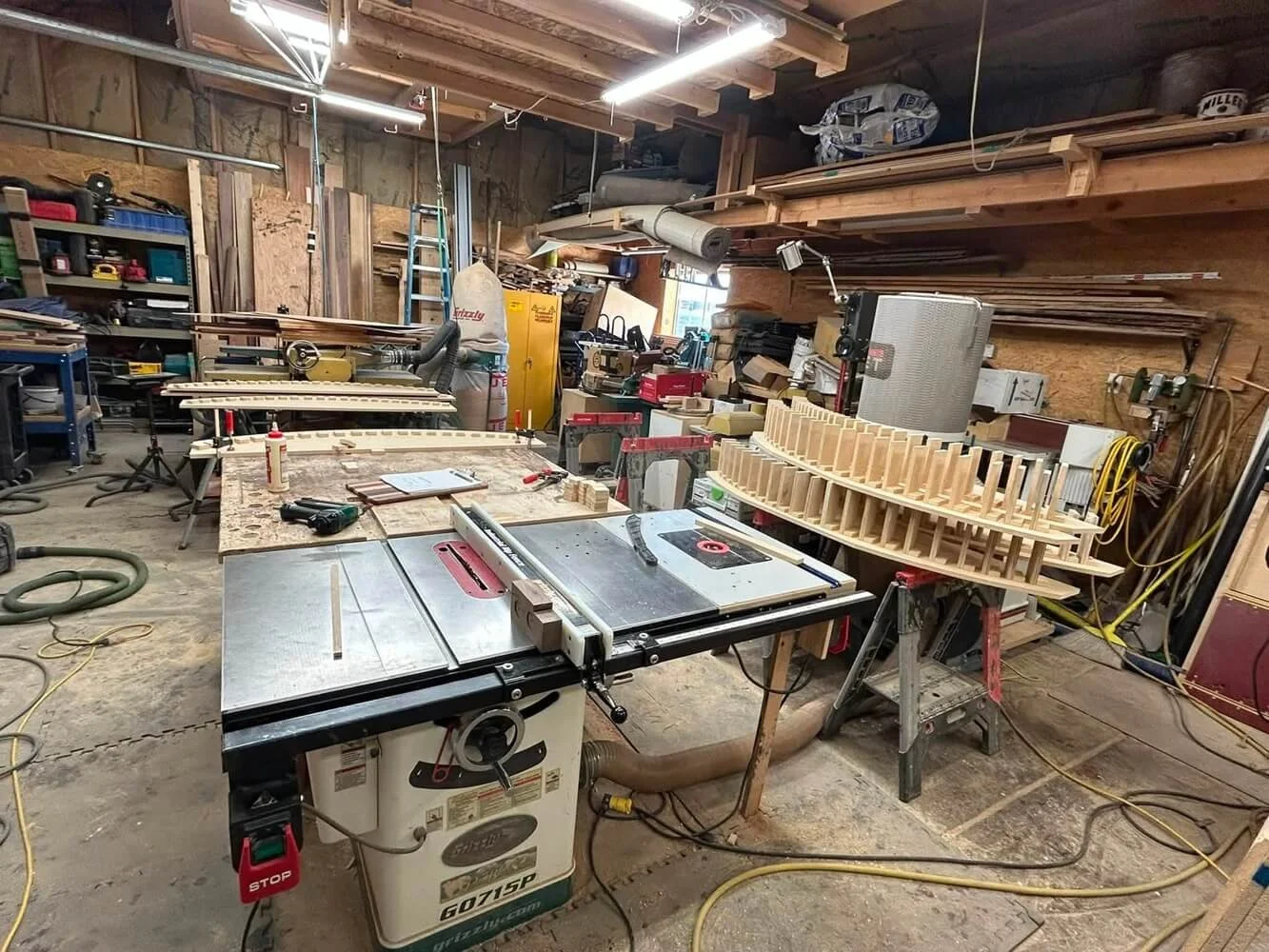
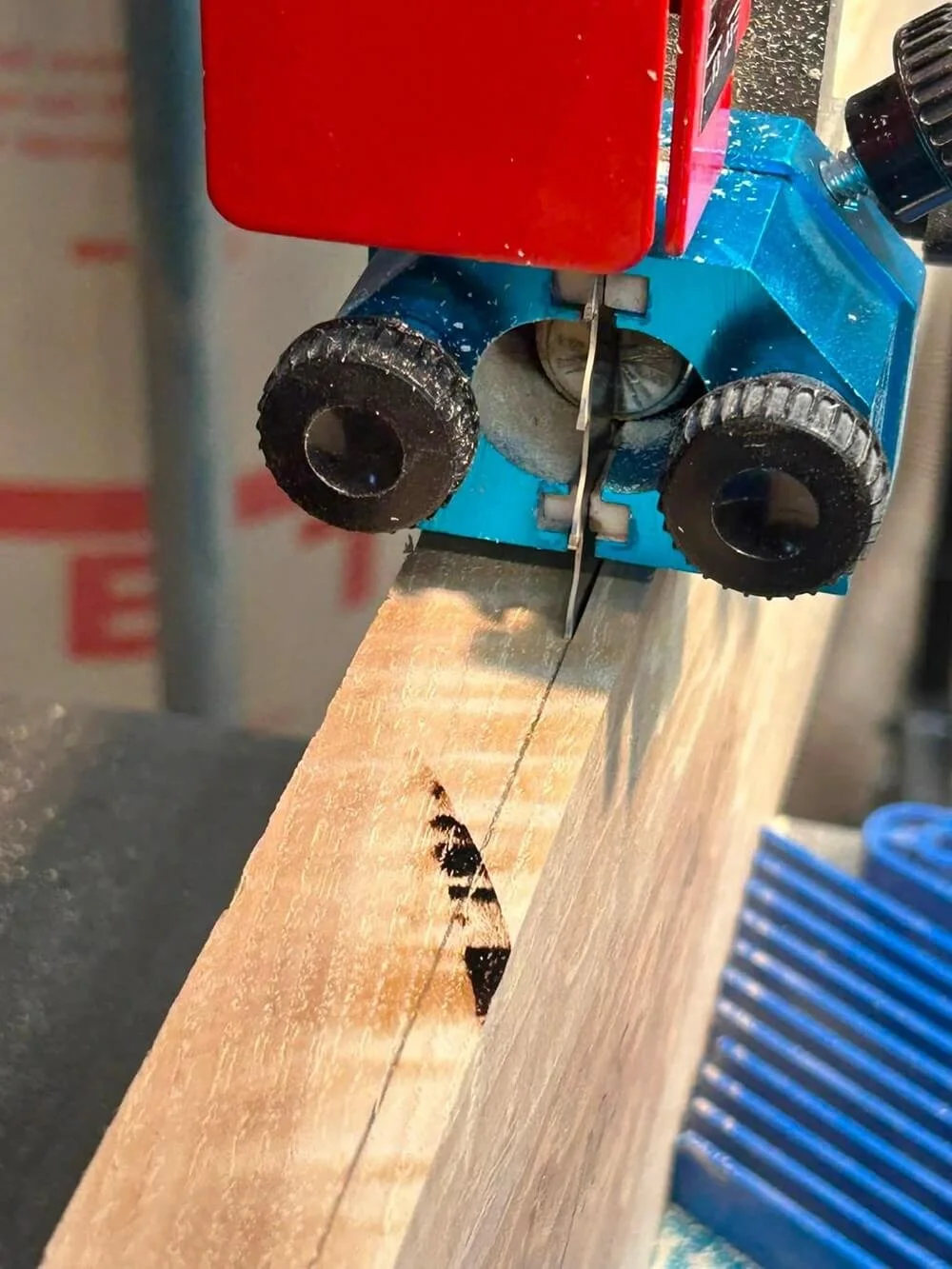
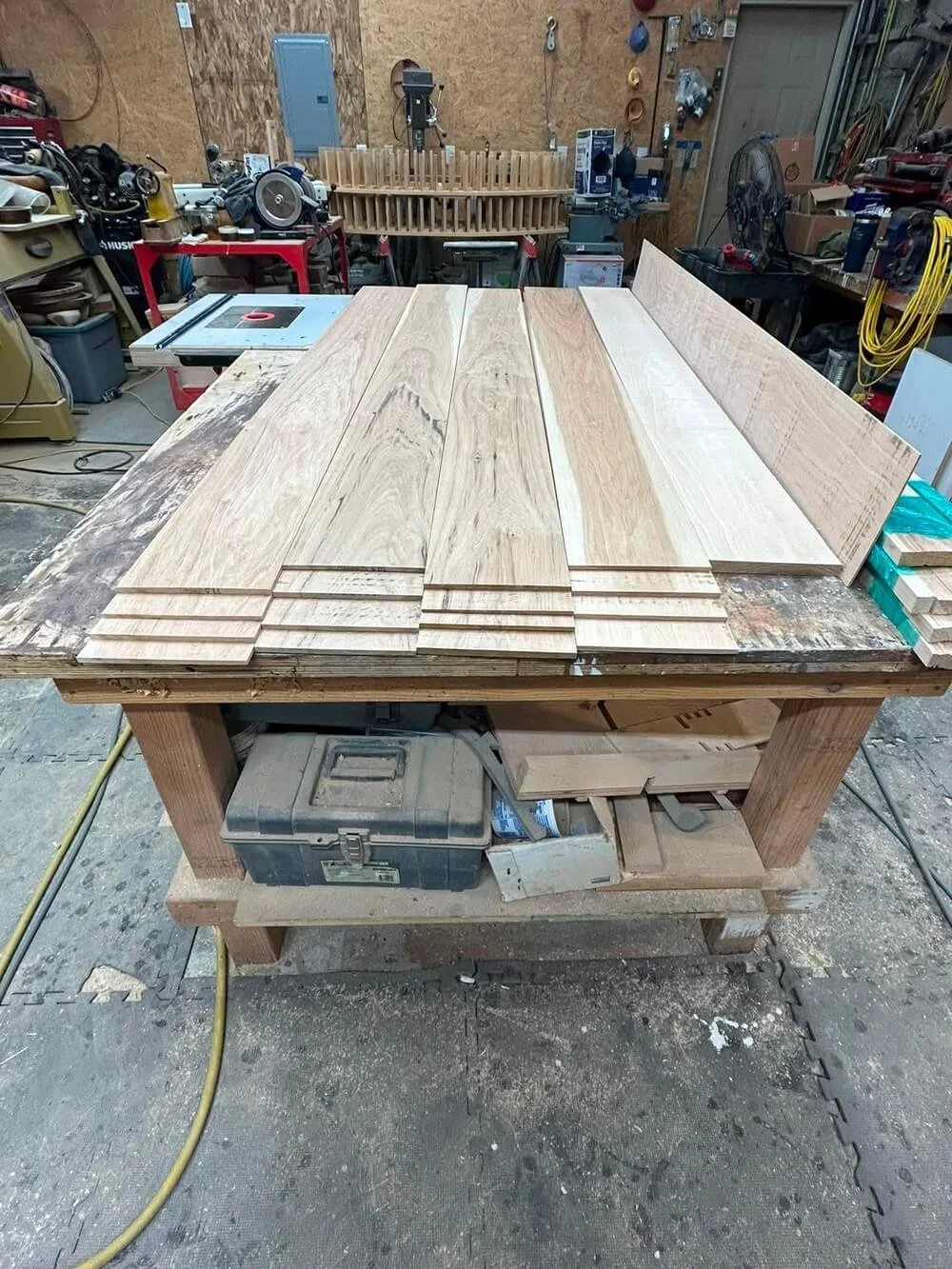
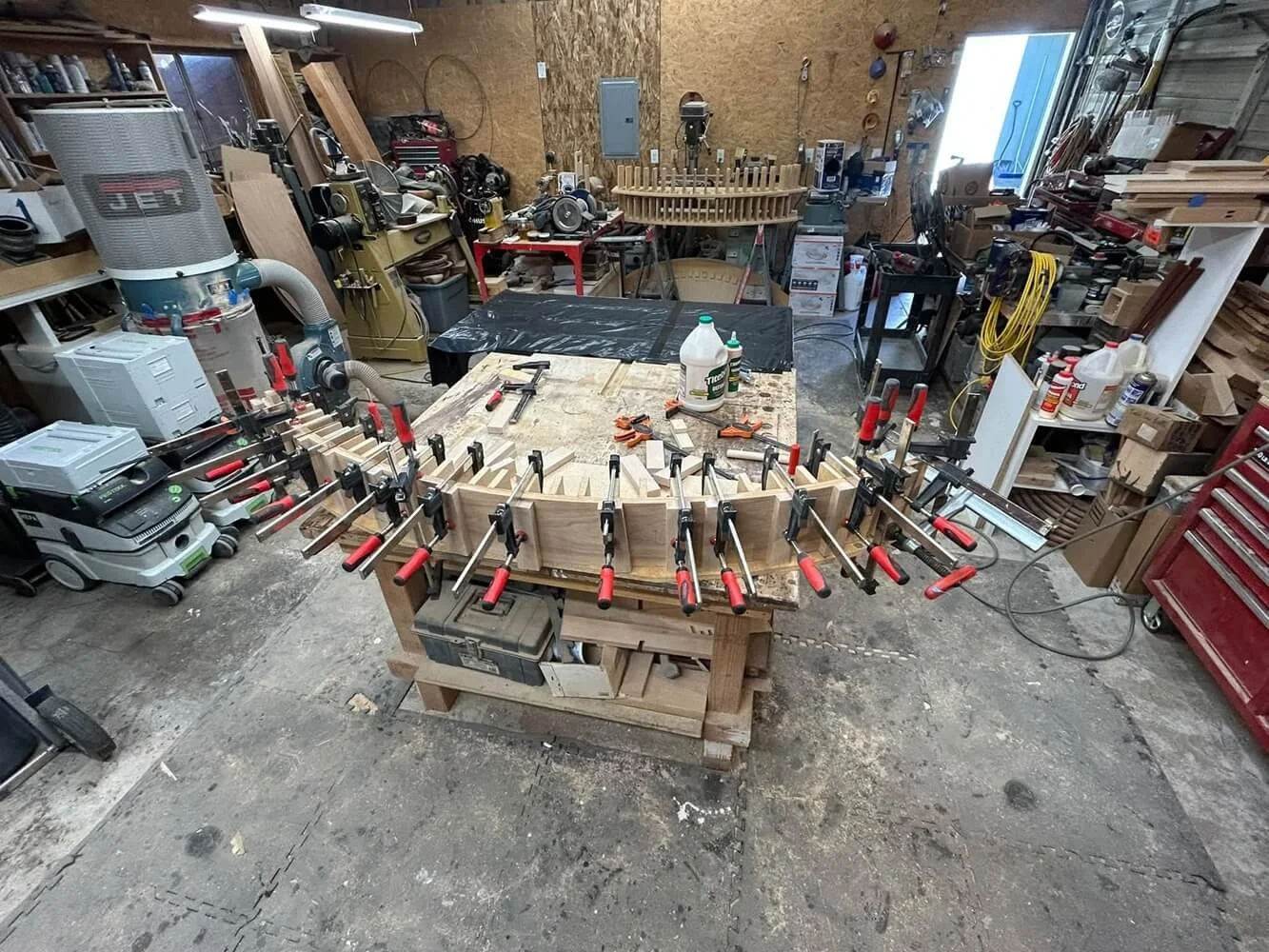
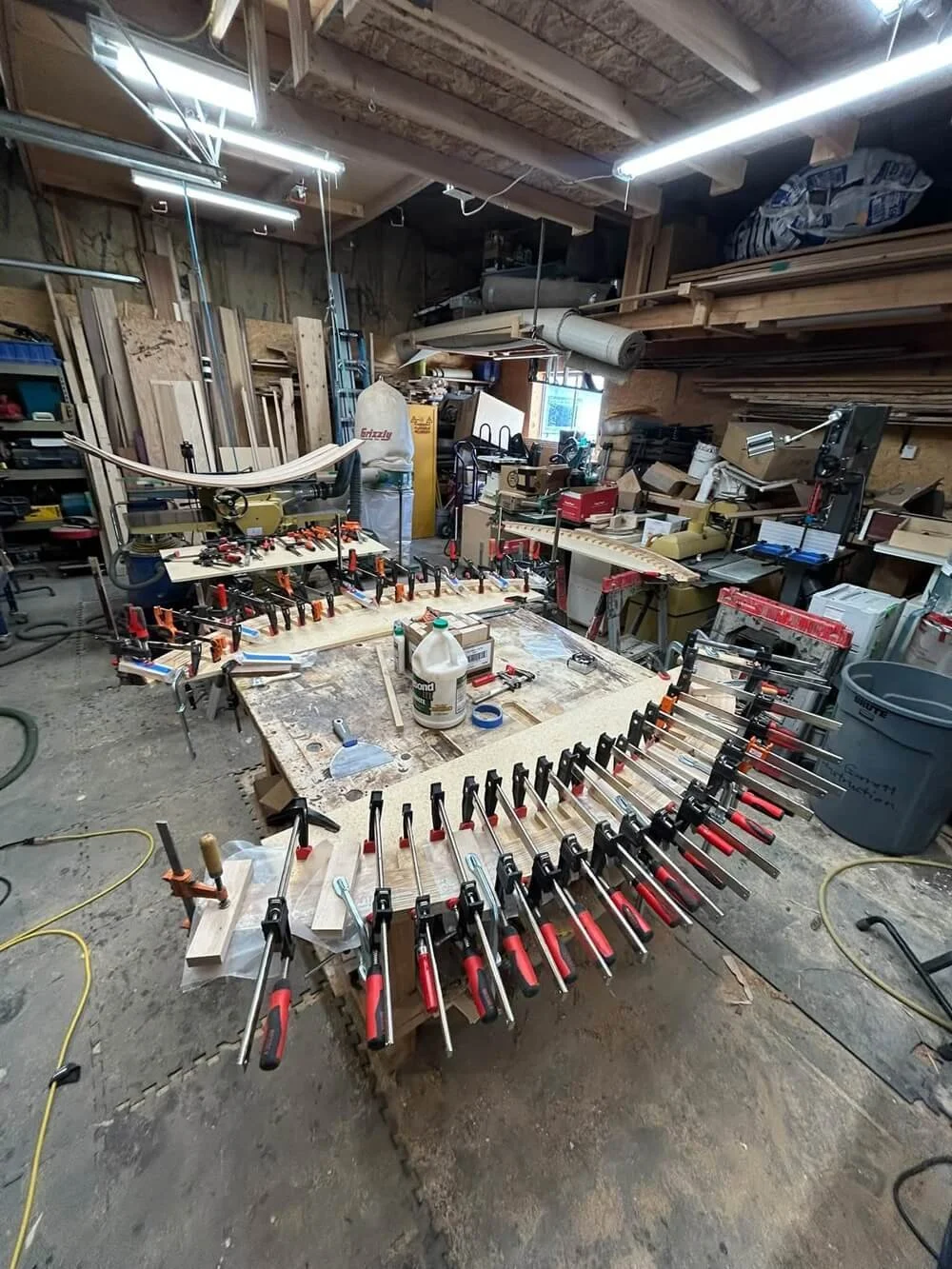
The project began with building custom forms to shape the curved bullnoses and risers. These forms needed to hold the wood securely during glue-up while maintaining the precise curves required for the staircase. Frank applied lacquer and wax to the forms to help prevent the laminated wood from sticking.
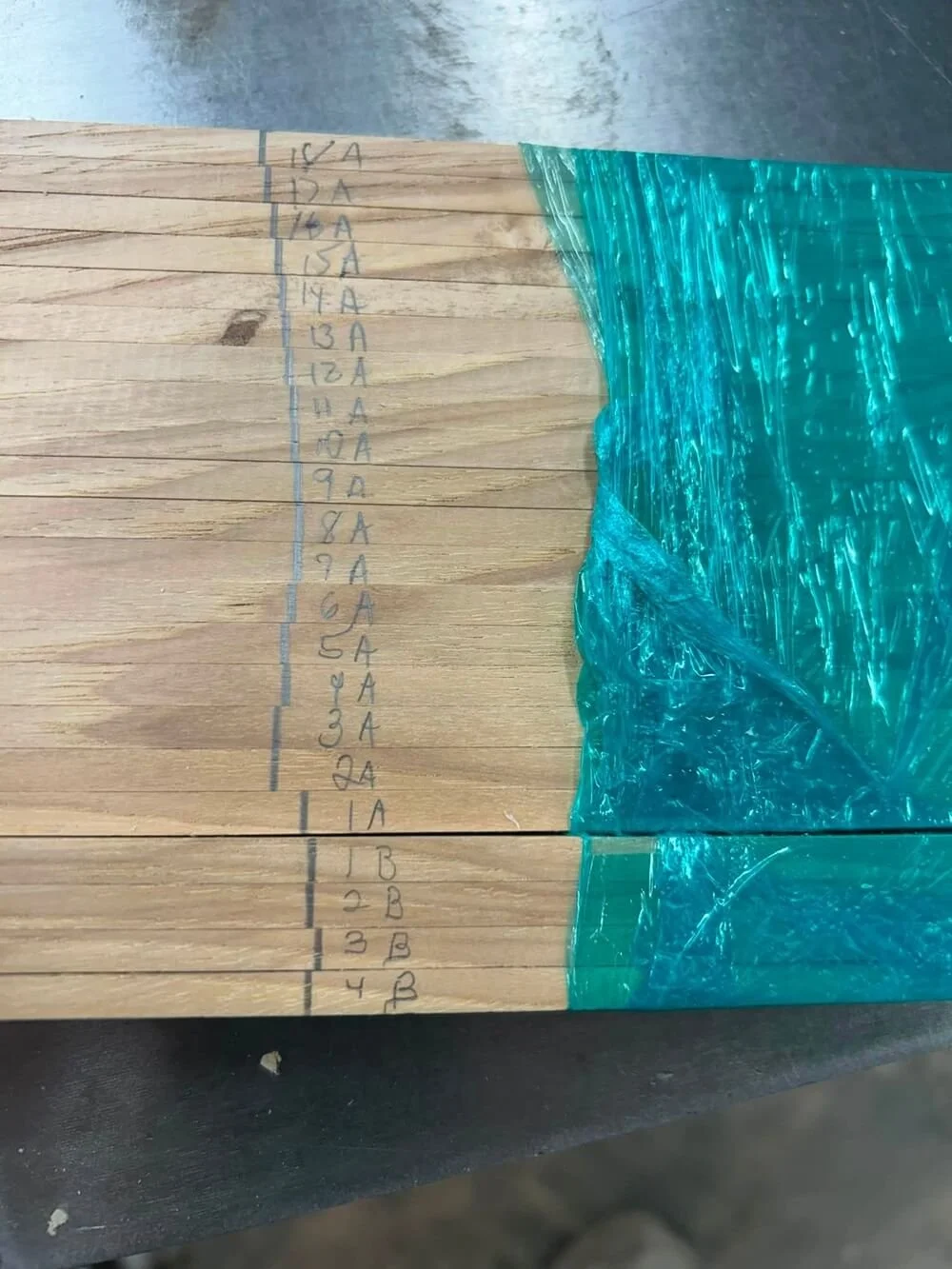
The hickory boards were then cut into thin strips that could bend around the forms. Each strip was numbered and positioned carefully to help align the grain in the finished pieces. The bullnoses required multiple layers of hickory, with different thicknesses to accommodate their shape.
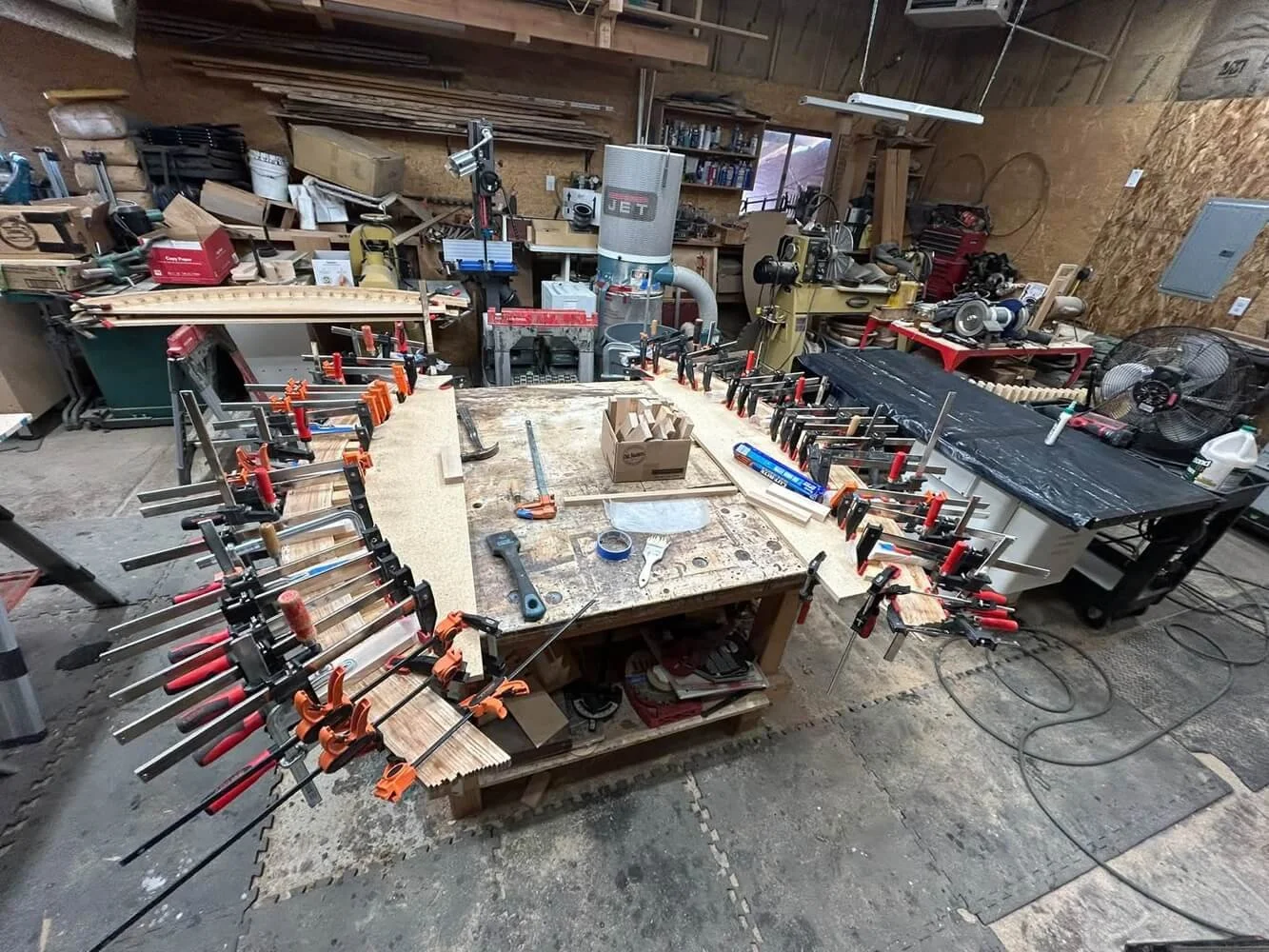
Each assembly was glued and secured with numerous clamps, then left to dry before the next steps could begin. With 12 separate glue-ups and careful timing between stages, the process required patience and attention to detail.
Shaping, Staining, and Finishing the Hickory
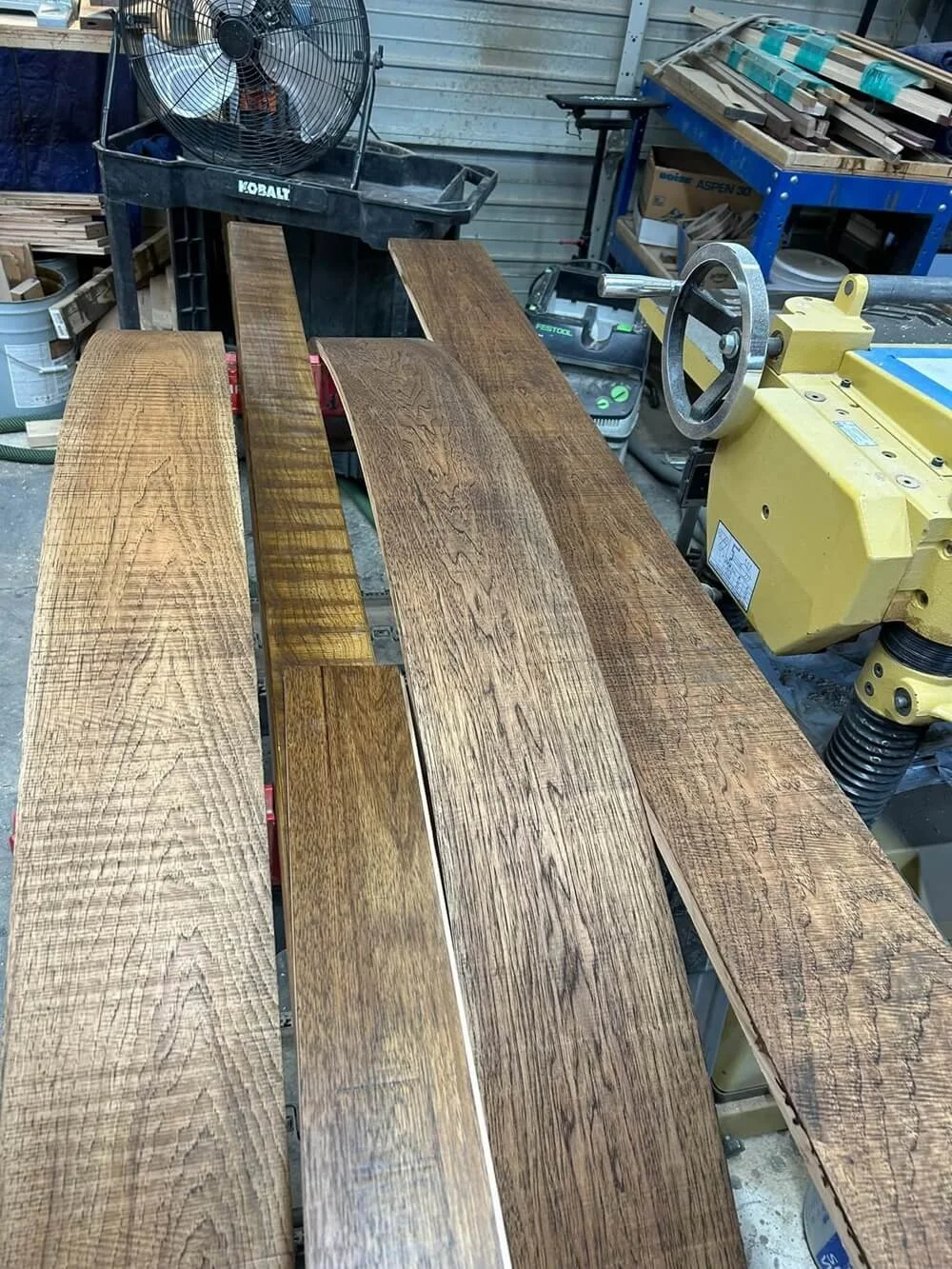
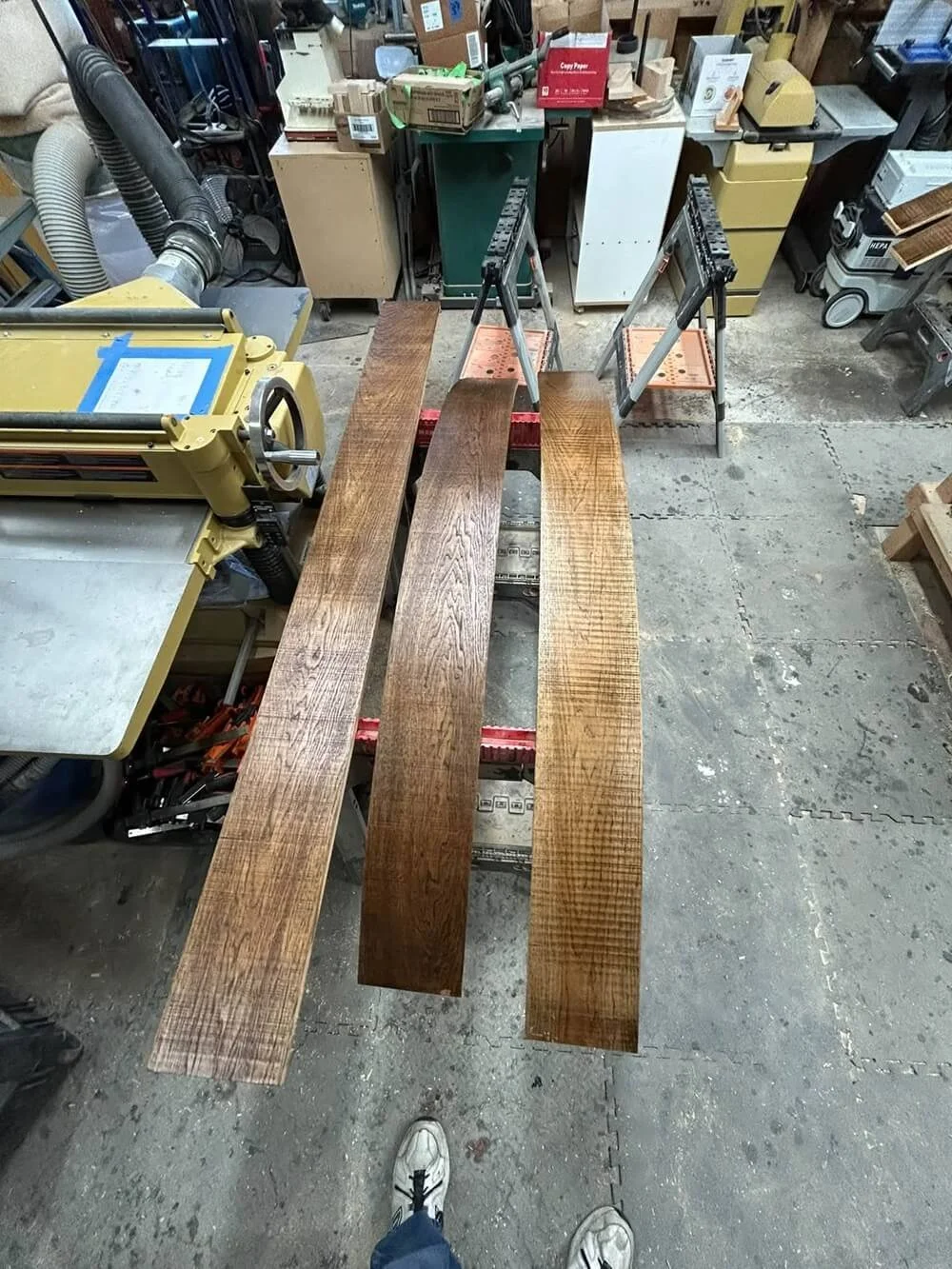
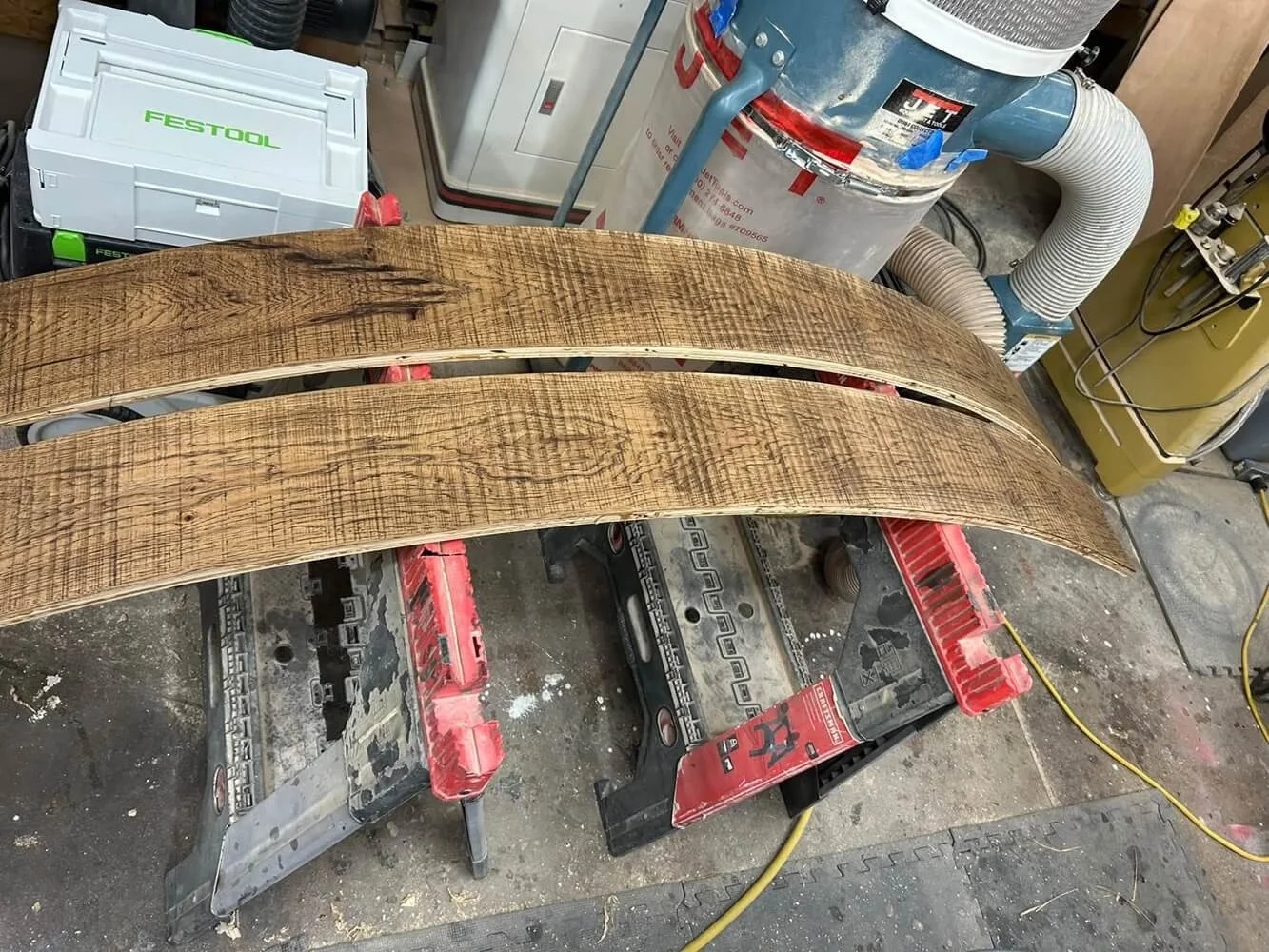
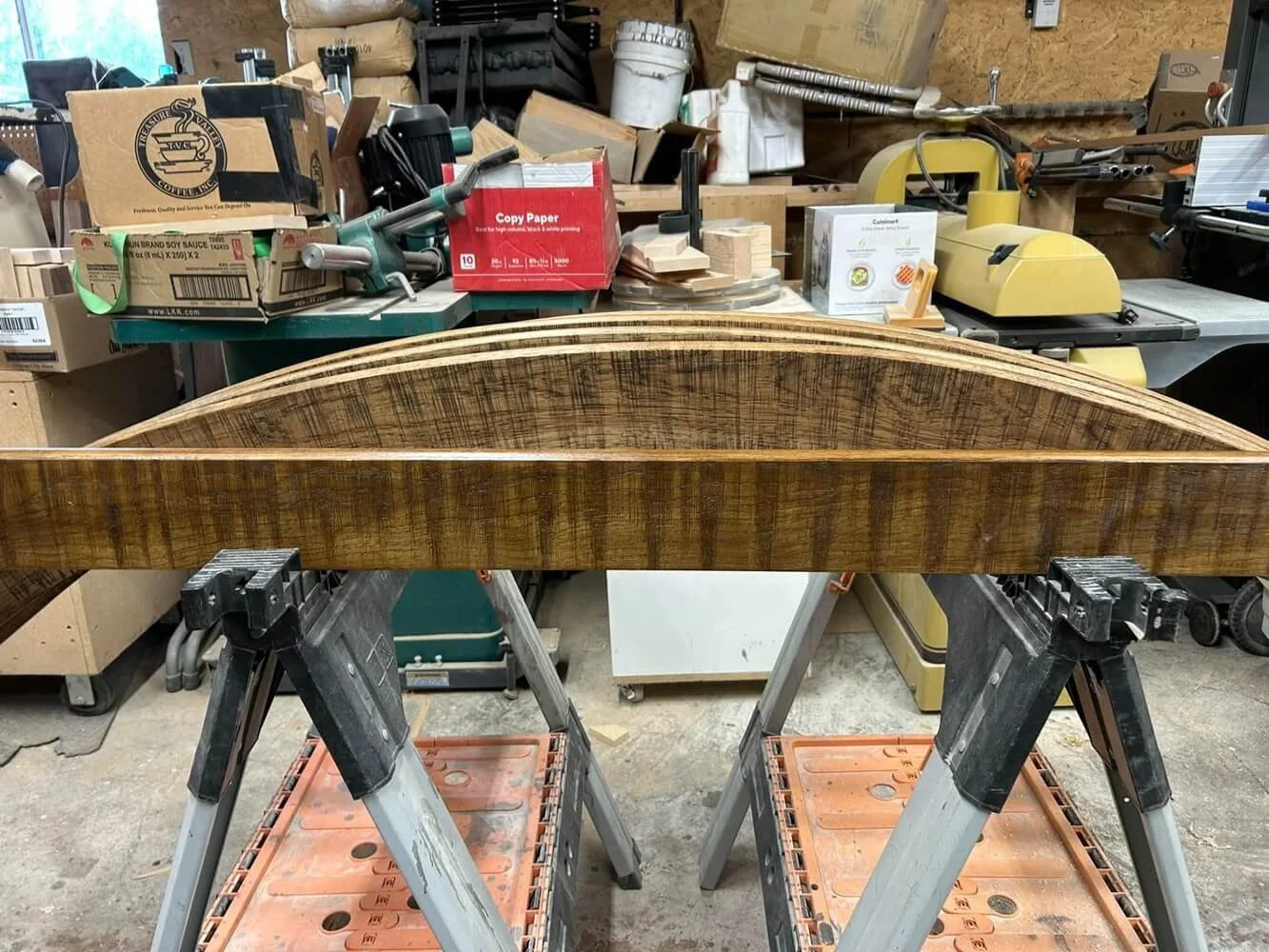
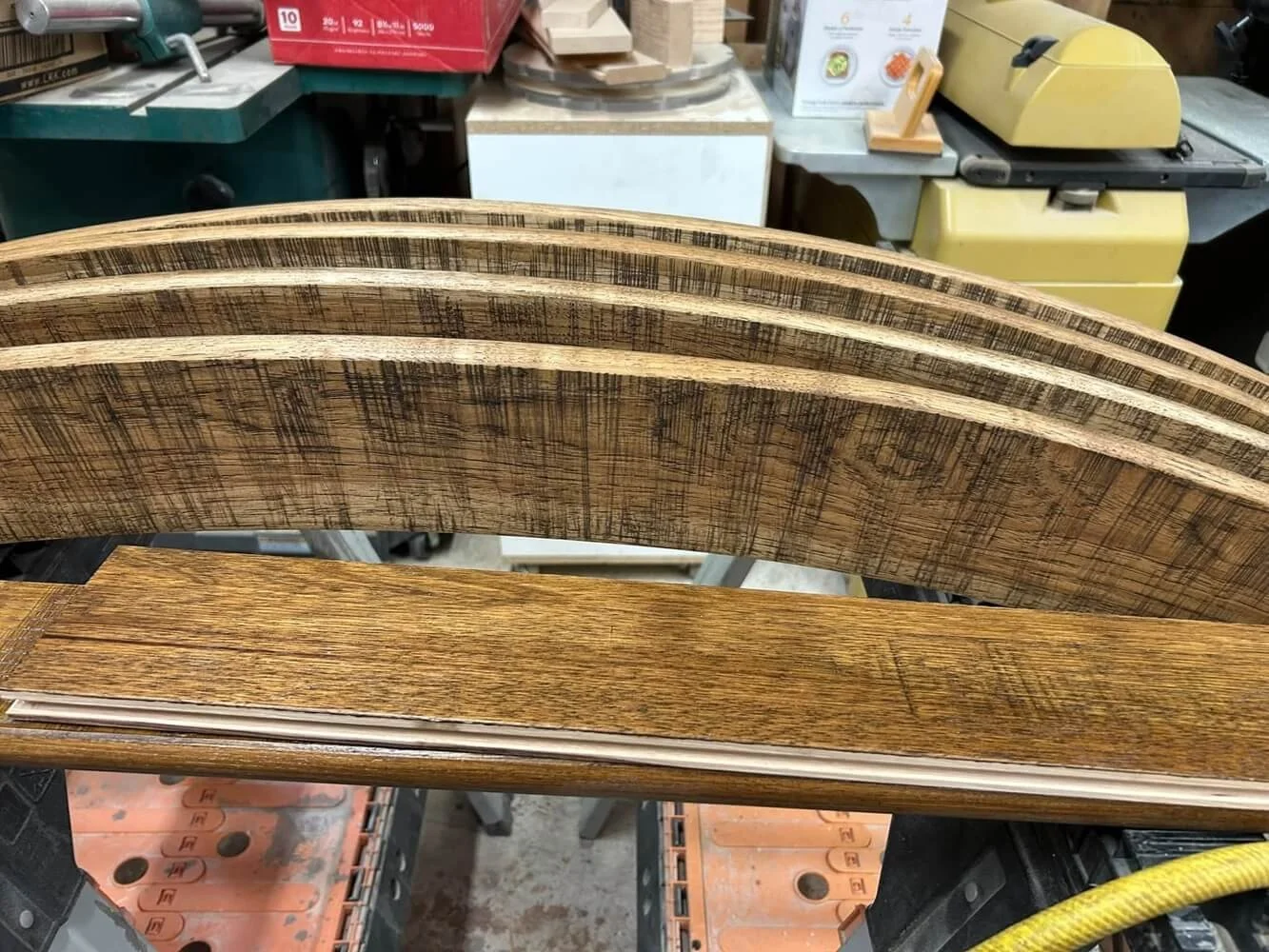
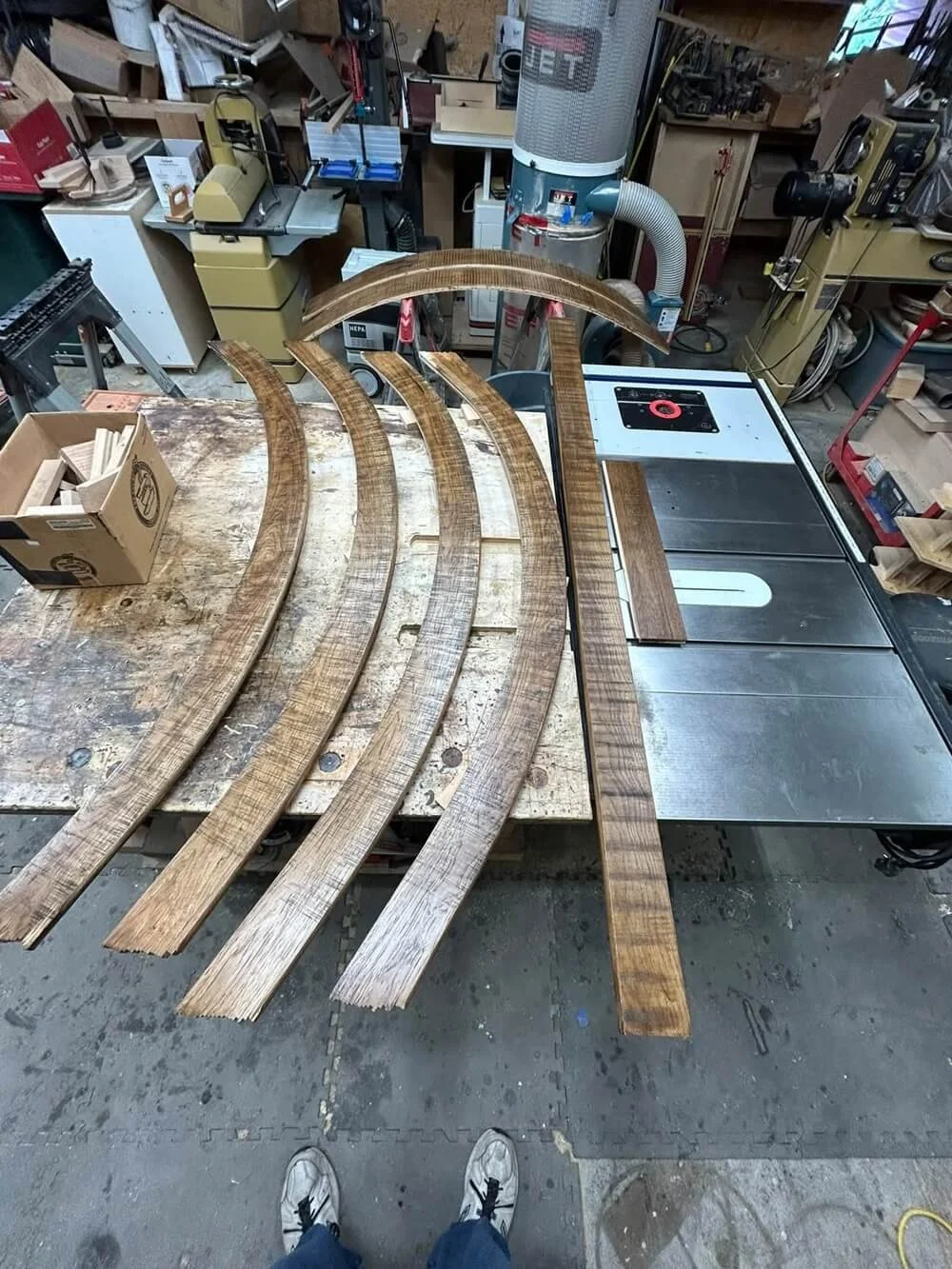
Once the laminated pieces had dried, Frank removed them from the forms and began sanding and shaping the curved components. The goal was to achieve smooth, consistent curves while preserving the natural character of the hickory grain.
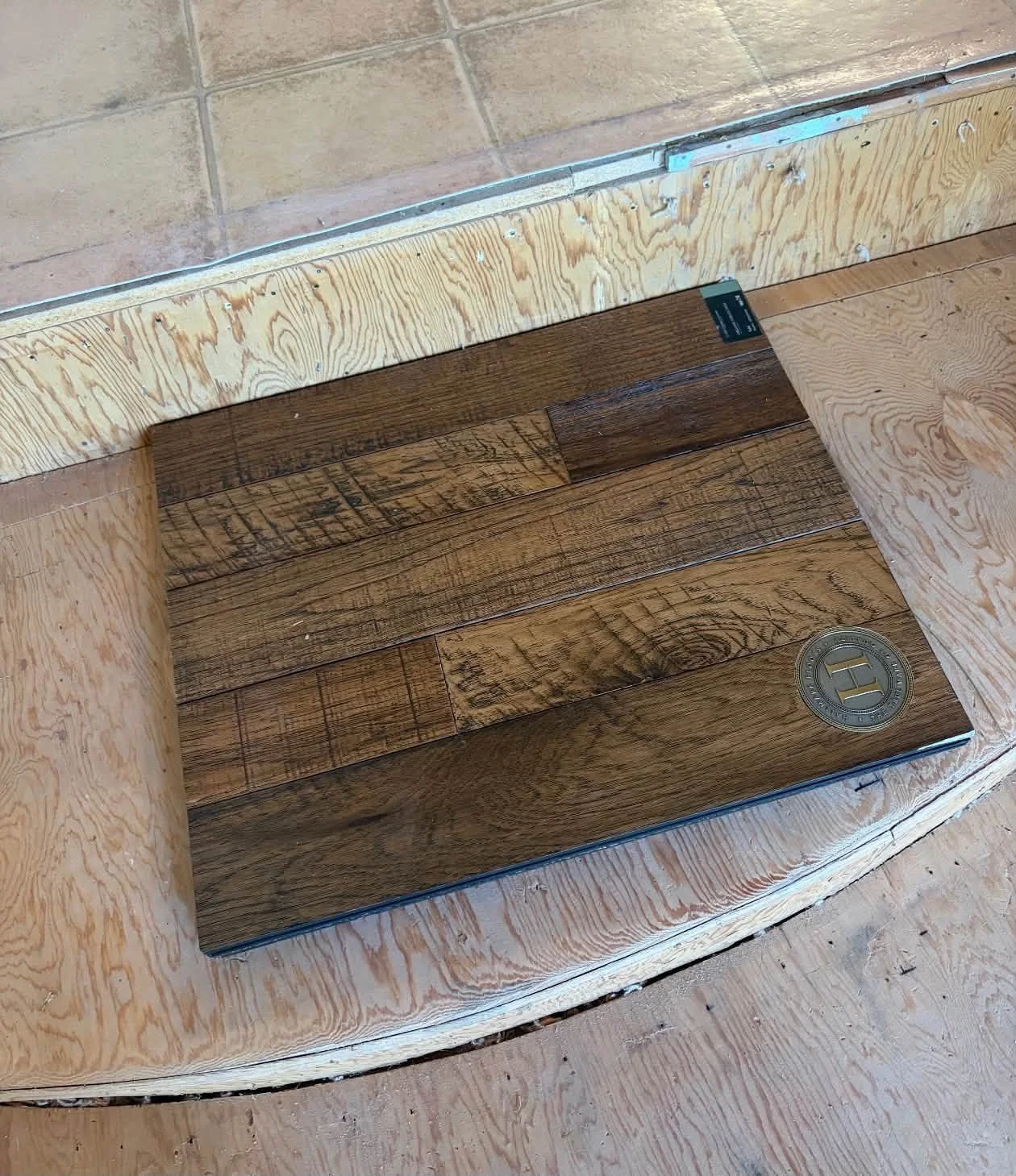
Matching the existing floor was another important part of the project. The home's hickory flooring had a medium-brown stain and distressed finish, so the new bullnoses and risers needed to complement both the color and texture. Frank used samples of the existing flooring as a reference while adjusting the stain and distressing.
After the finish was applied, the completed components were ready for installation. Building the pieces in the workshop allowed Frank to work through the complex shaping and finishing process before fitting them to the staircase.
Installing the Curved Hickory Staircase
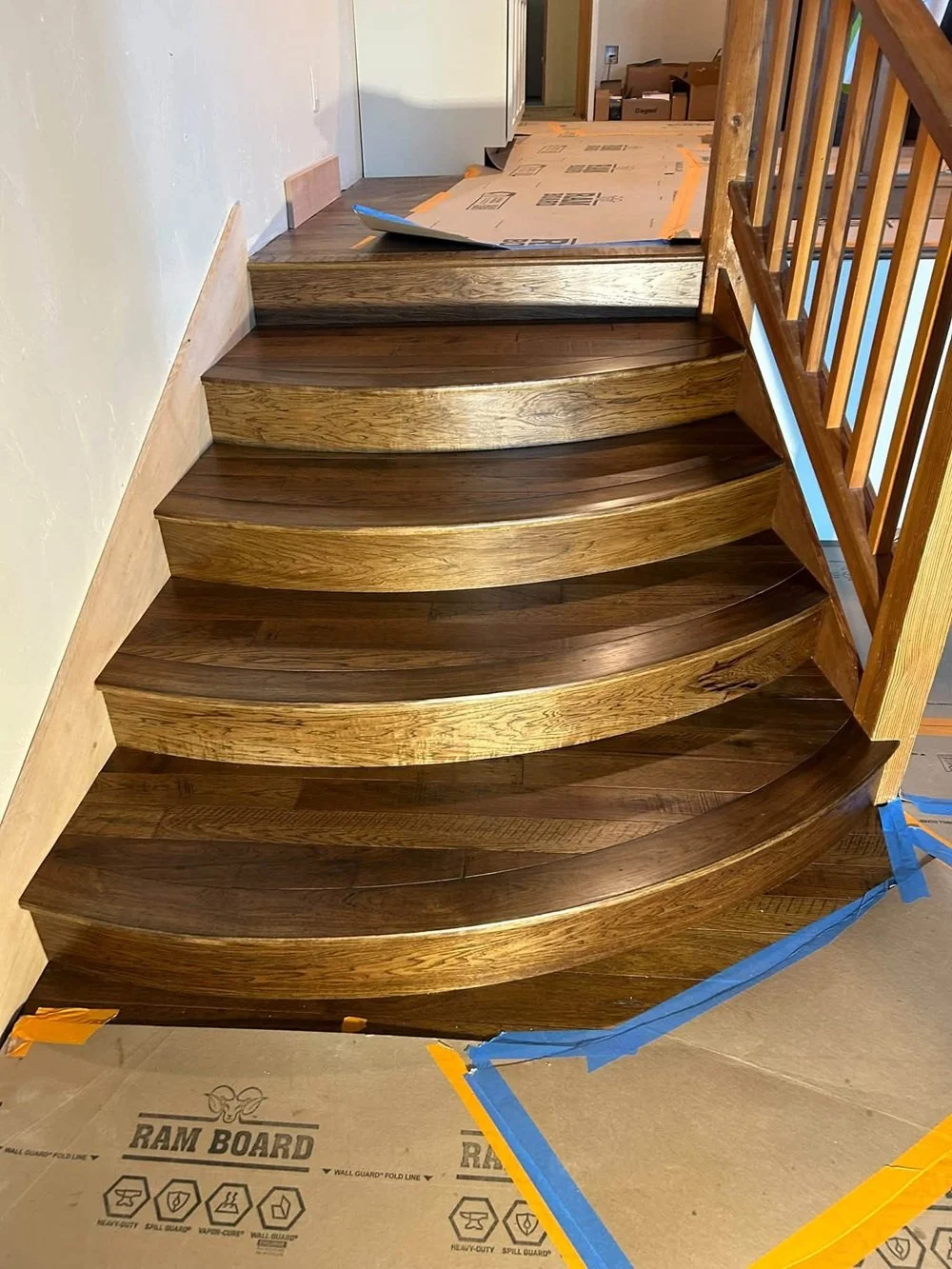
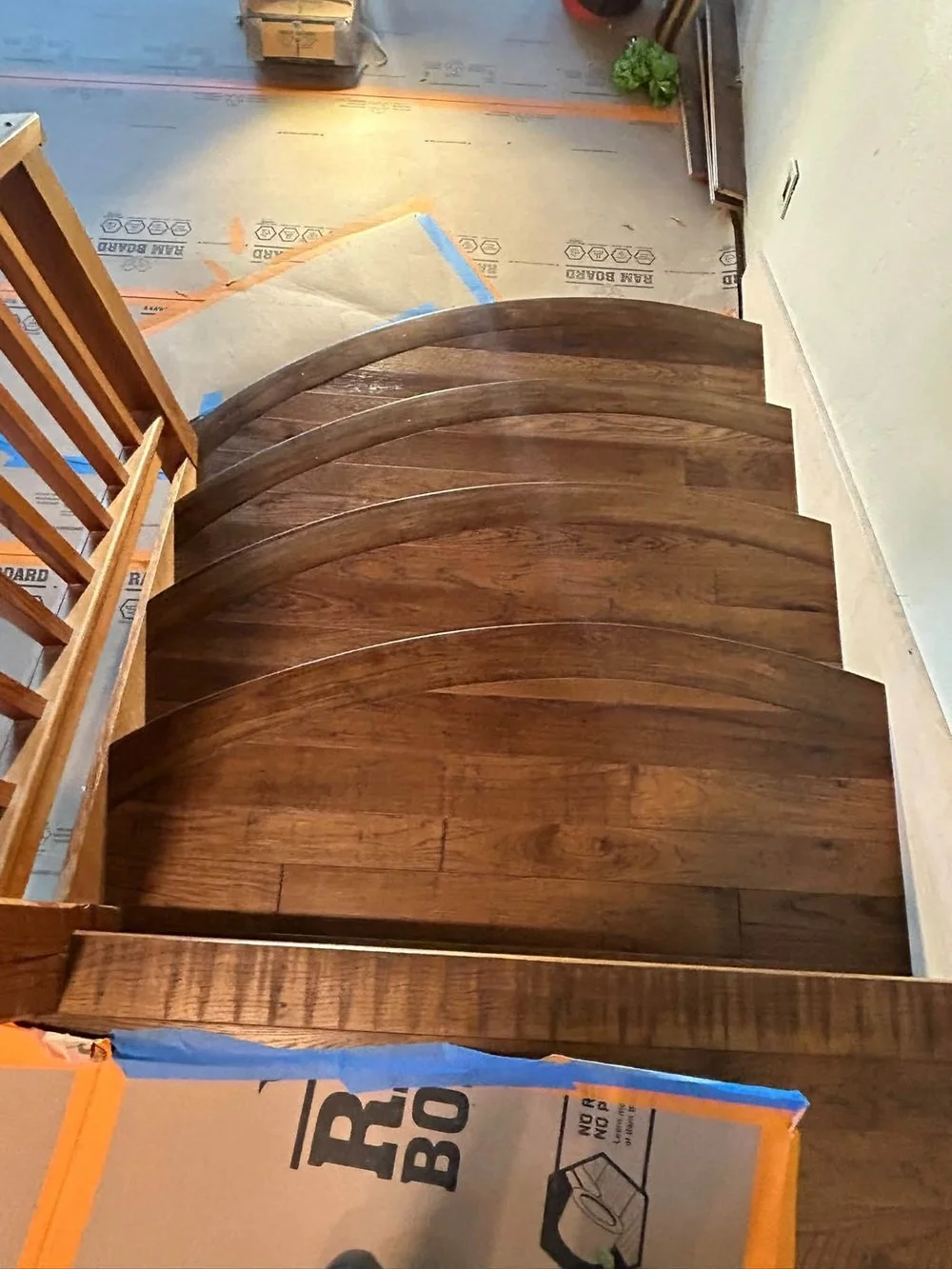
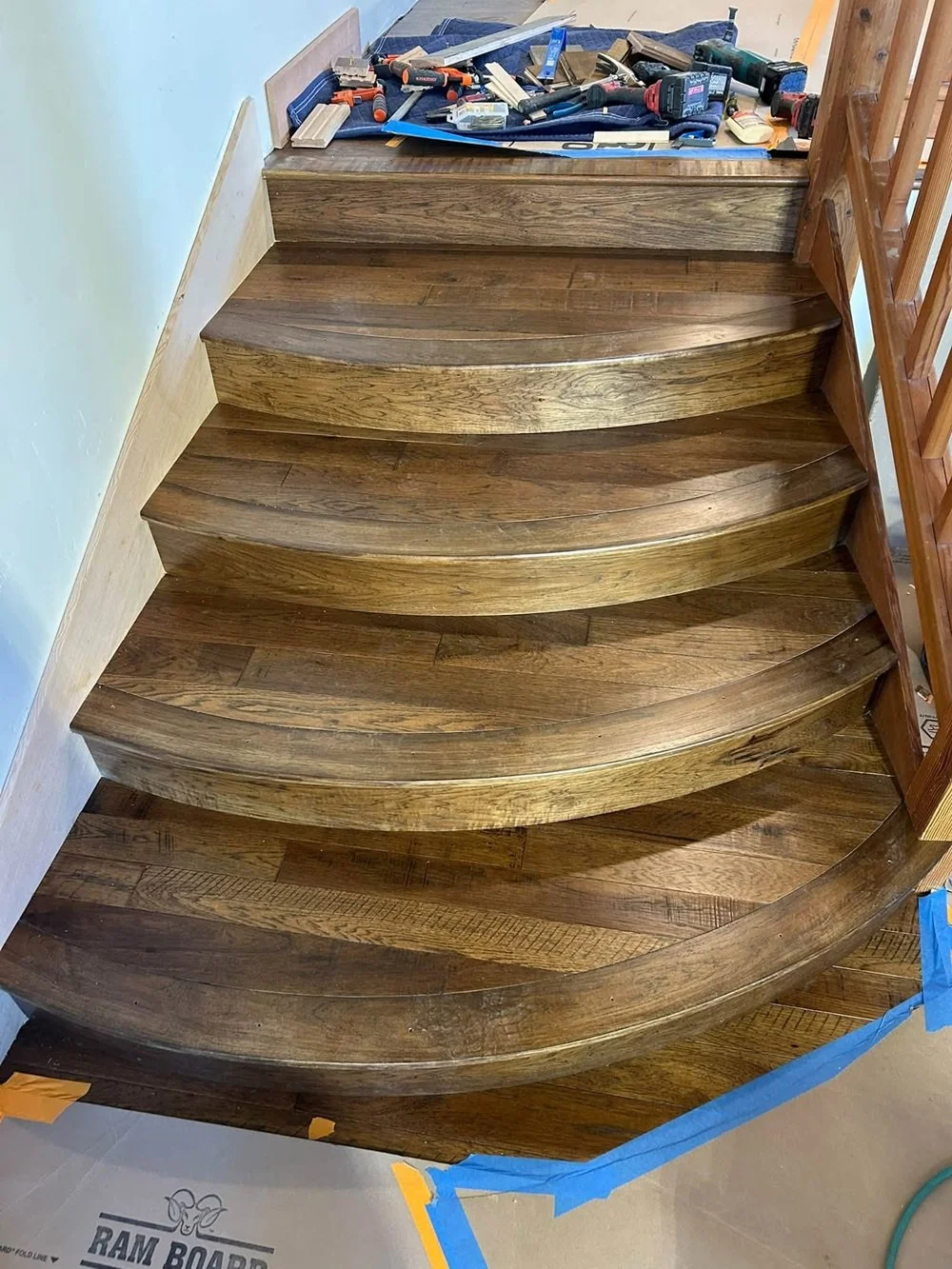
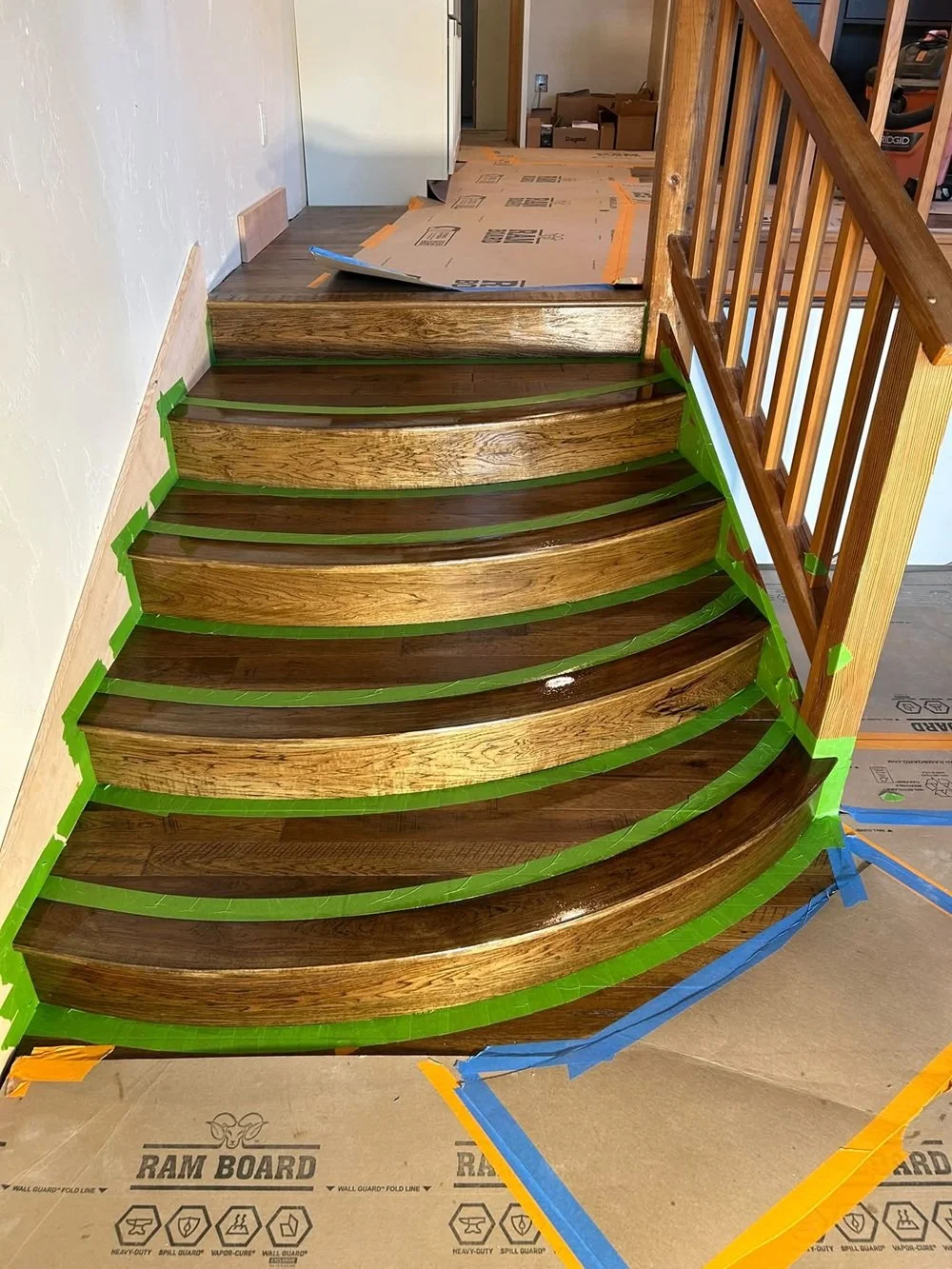
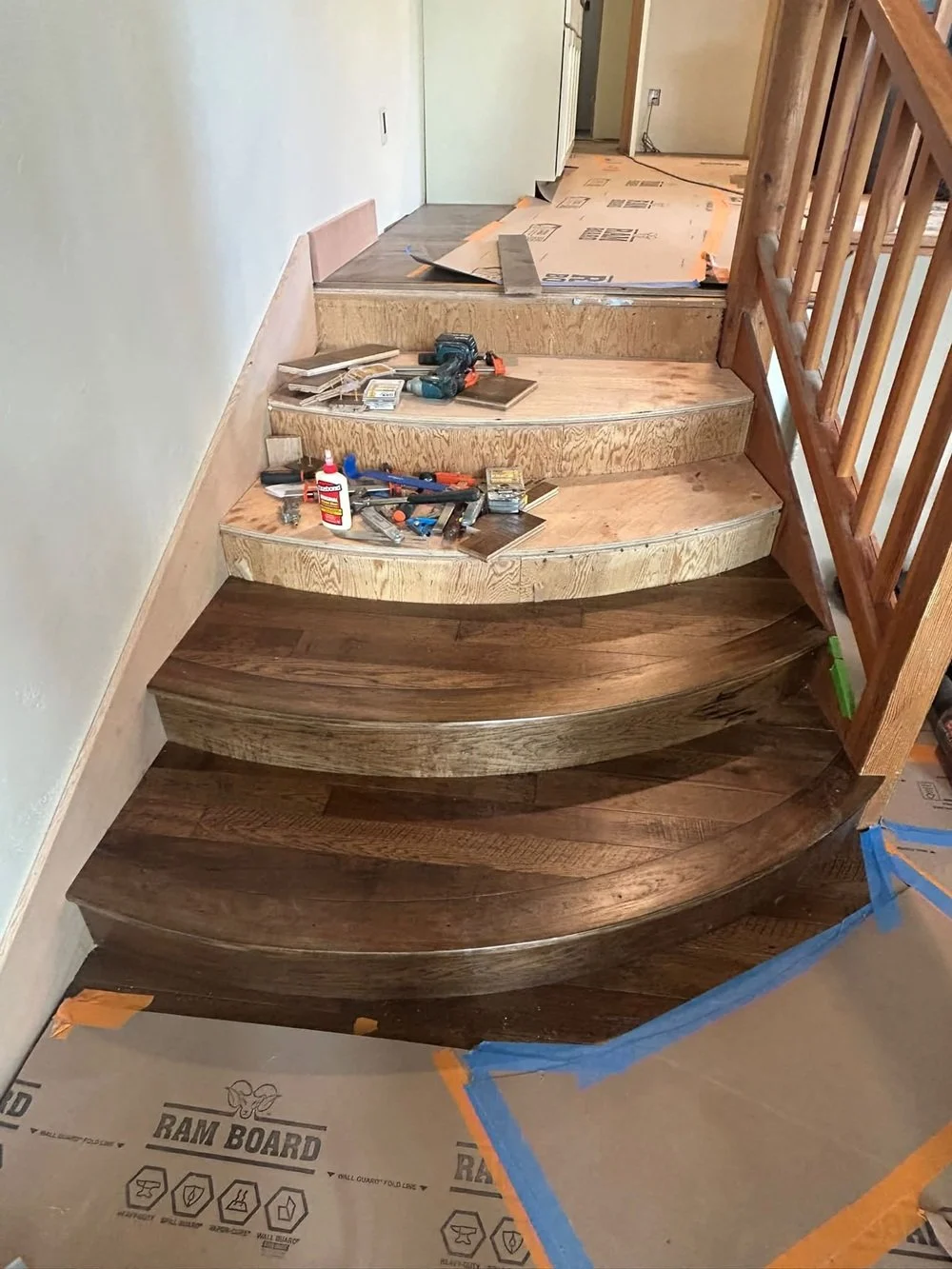
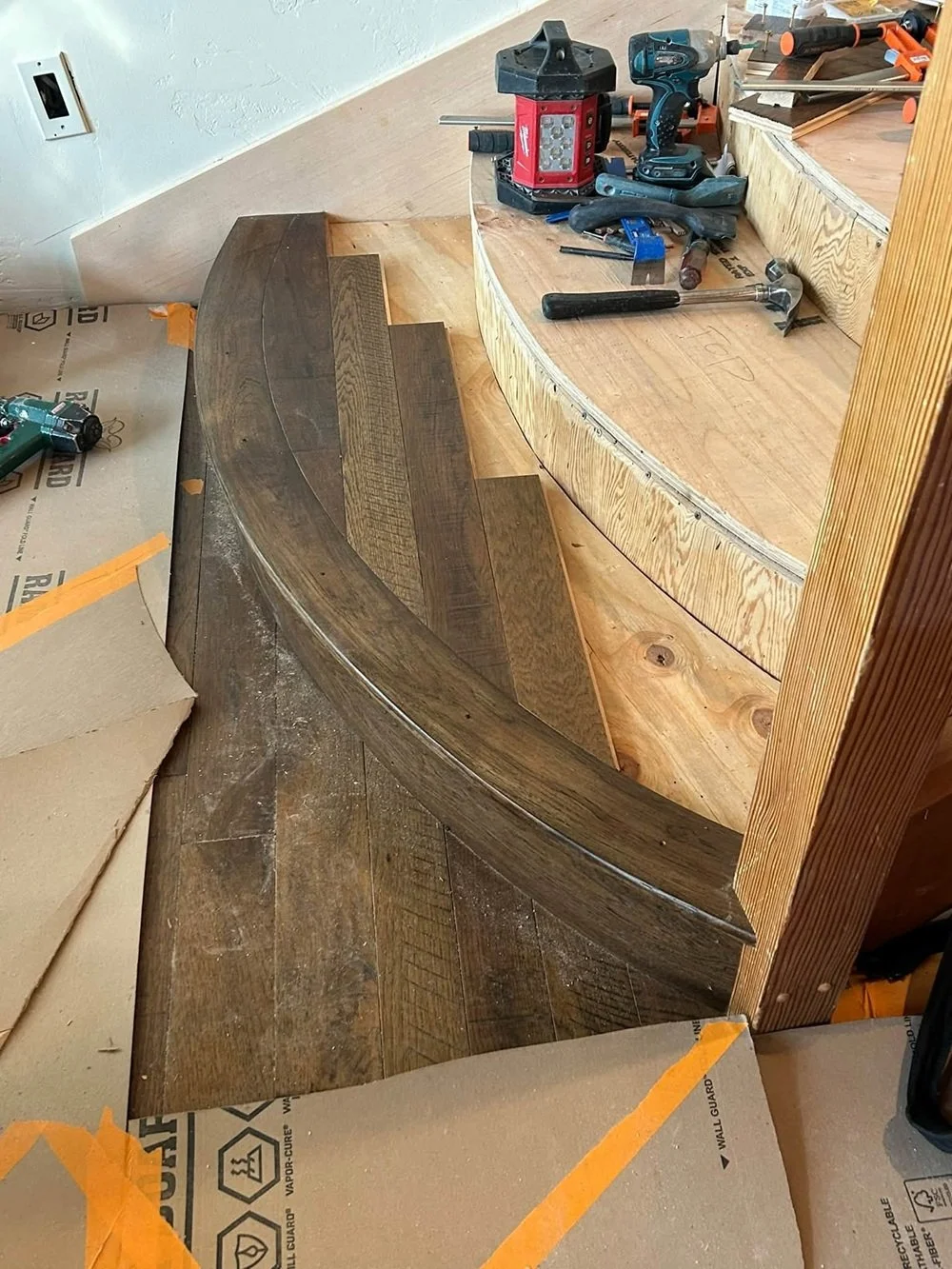
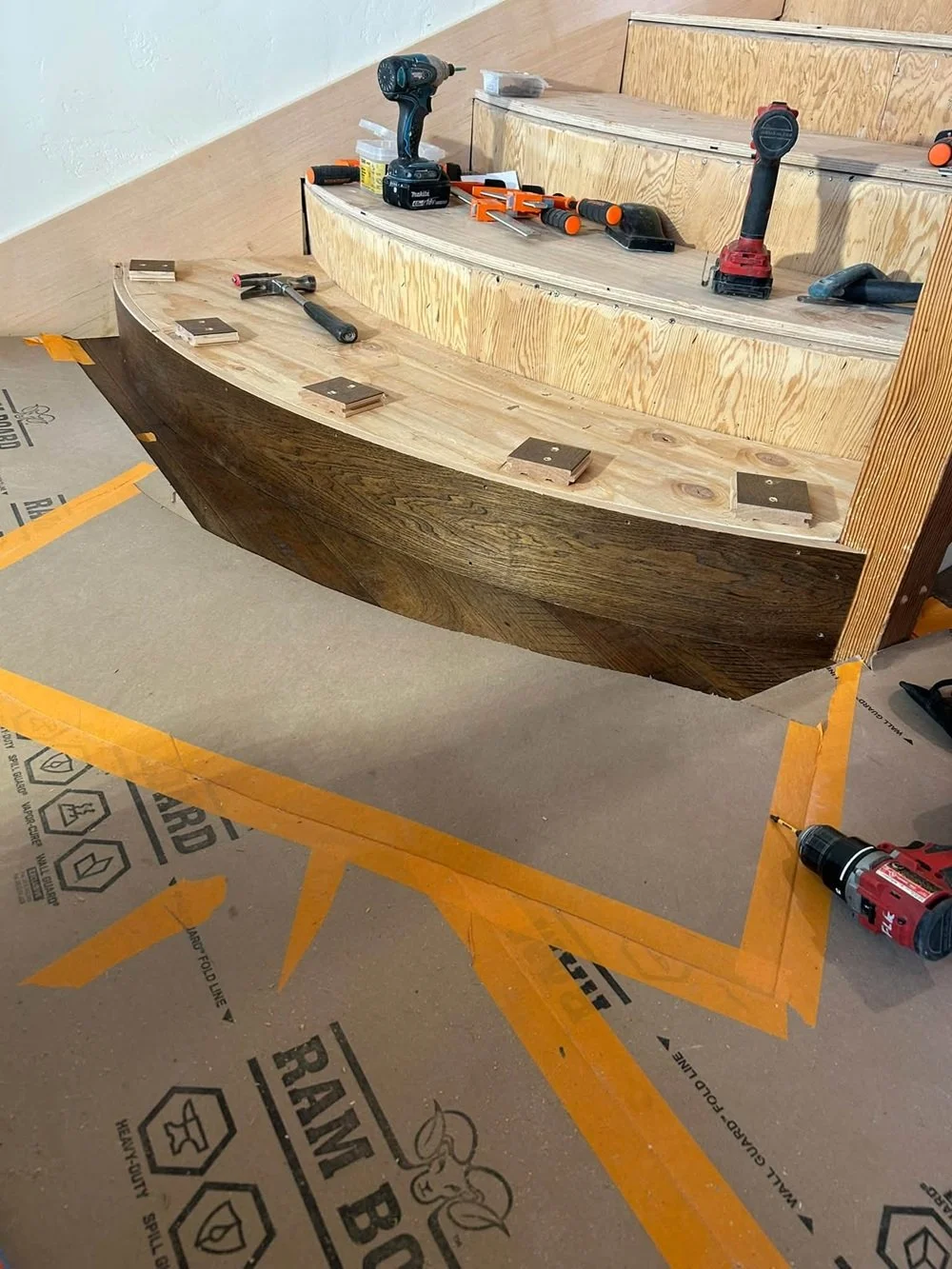
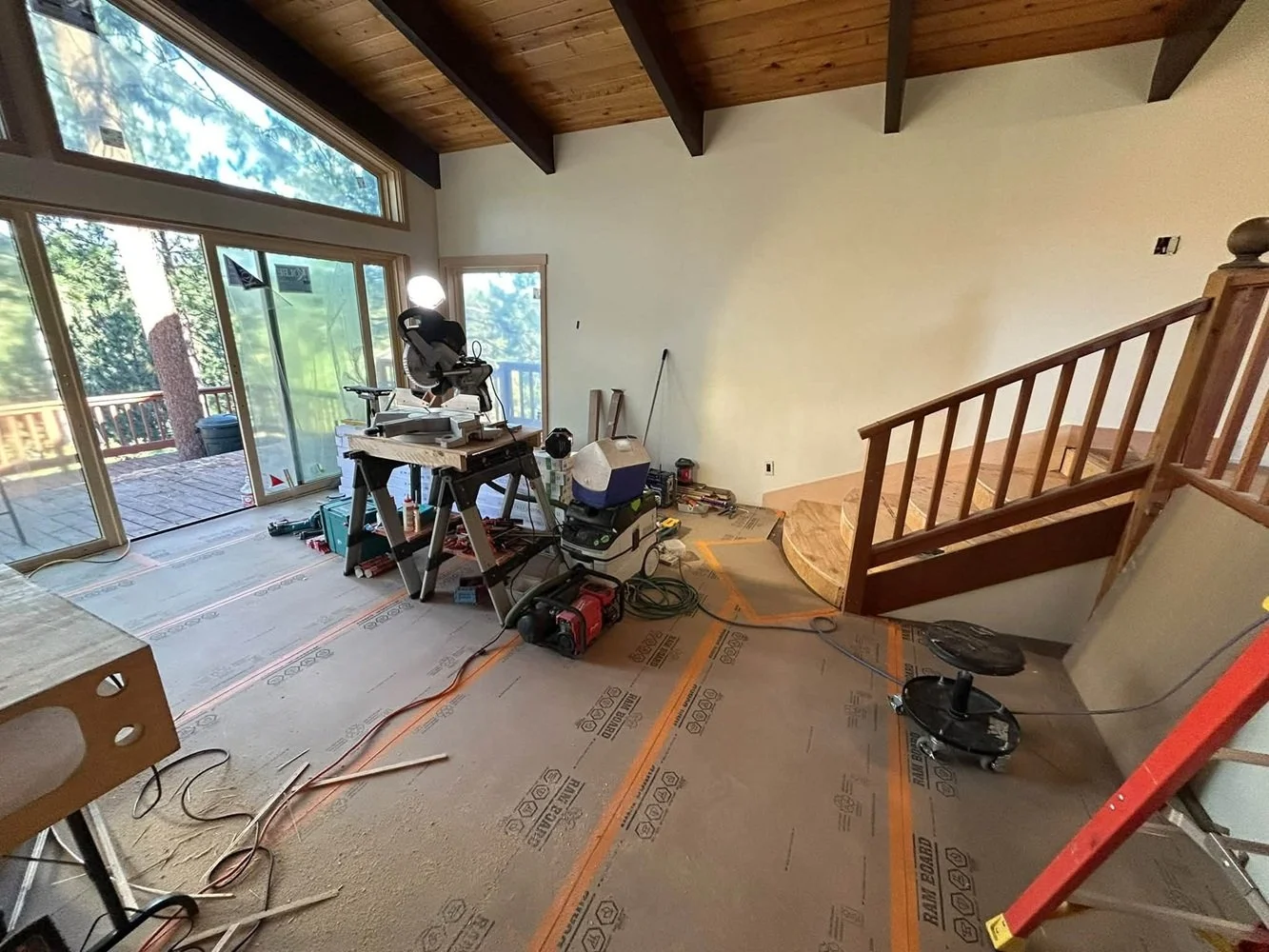
After completing the curved hickory bullnoses and risers in the workshop, the next step was fitting everything to the existing staircase. The installation took four days of detailed work, followed by a final visit to remove the masking tape and photograph the completed project.
The first priority was making sure the steps would be safe and consistent. Frank added 3/4-inch plywood to the existing treads to bring them to a uniform height before installing the curved risers and bullnoses.
Each piece of flooring needed a precise pattern to follow the curve of the staircase. Frank used craft paper to trace the shape, transferred the pattern to the flooring, and carefully cut each piece with a jigsaw. From there, he refined the curves with a belt sander, repeatedly checking the fit and making adjustments until each piece fit correctly.
Once the flooring was fitted, the boards were joined to the bullnoses with a glued spline, secured with construction adhesive, and nailed in place. Particular attention was given to aligning the flooring grain so the pattern flowed continuously across the treads and up the staircase.
With the components installed, Frank filled the nail holes, taped off the surrounding areas, hand-sanded the risers and bullnoses, and applied the final coat of finish. The completed staircase brings together the custom curved hickory components and carefully fitted flooring in a cohesive, finished look.
Custom Staircase Woodwork and Finish Carpentry in Central Oregon
Custom curved stair components are one example of the detailed woodworking and finish carpentry Frank L. Garrett Construction provides throughout Bend, Redmond, and Central Oregon. Projects range from new staircase details and railing updates to custom mantels, cabinetry, interior finish trim, and one-of-a-kind furniture.
Whether working on building a new home or updating an existing space, we focus on careful fitting, quality materials, and finishes that complement the surrounding home.
Contact us through the website or give us a call if you have a woodworking project you’d like to discuss with Frank.